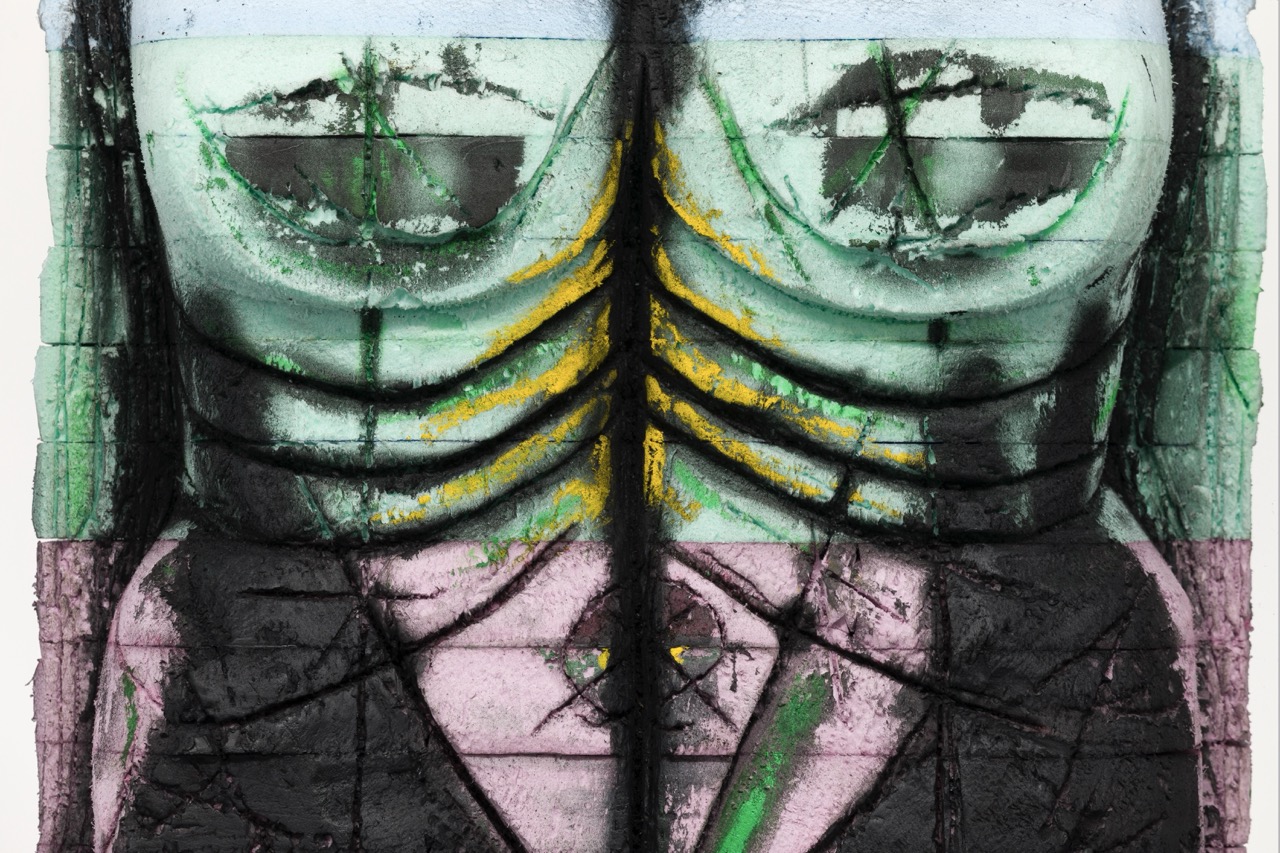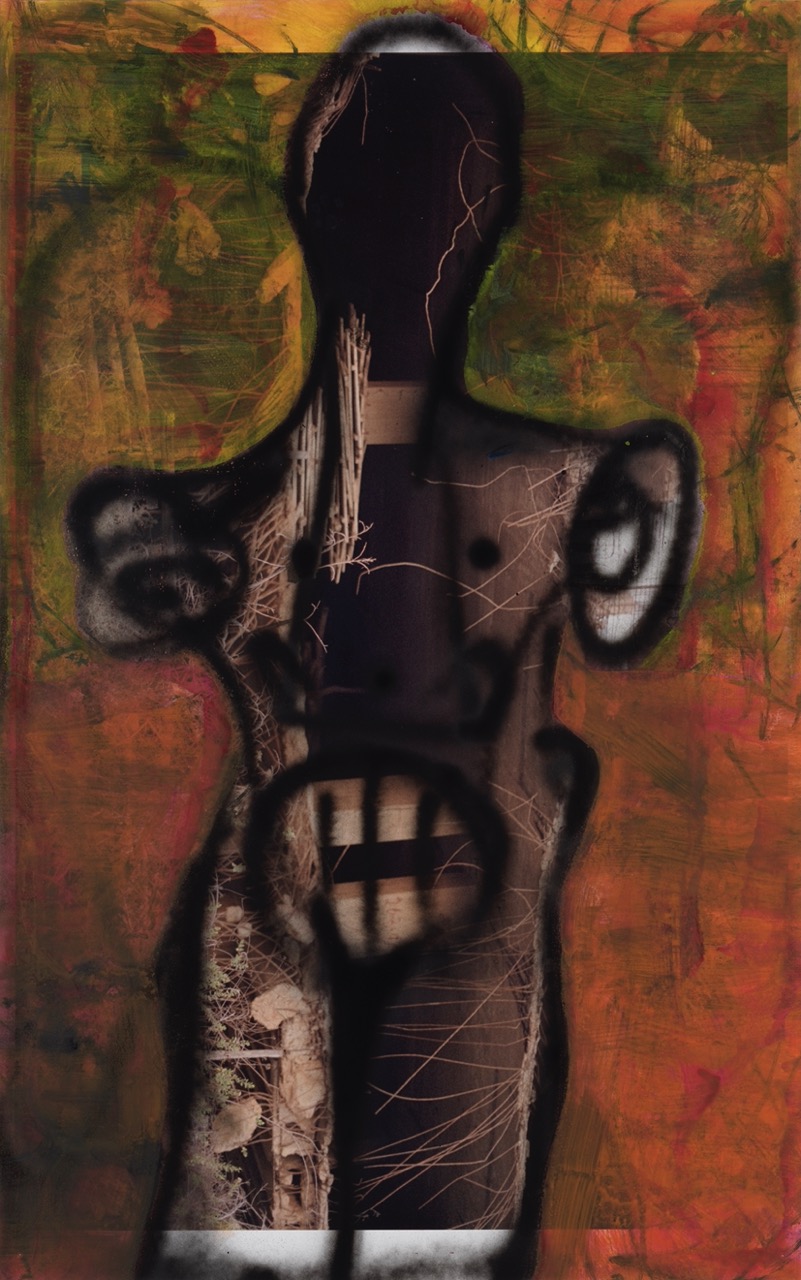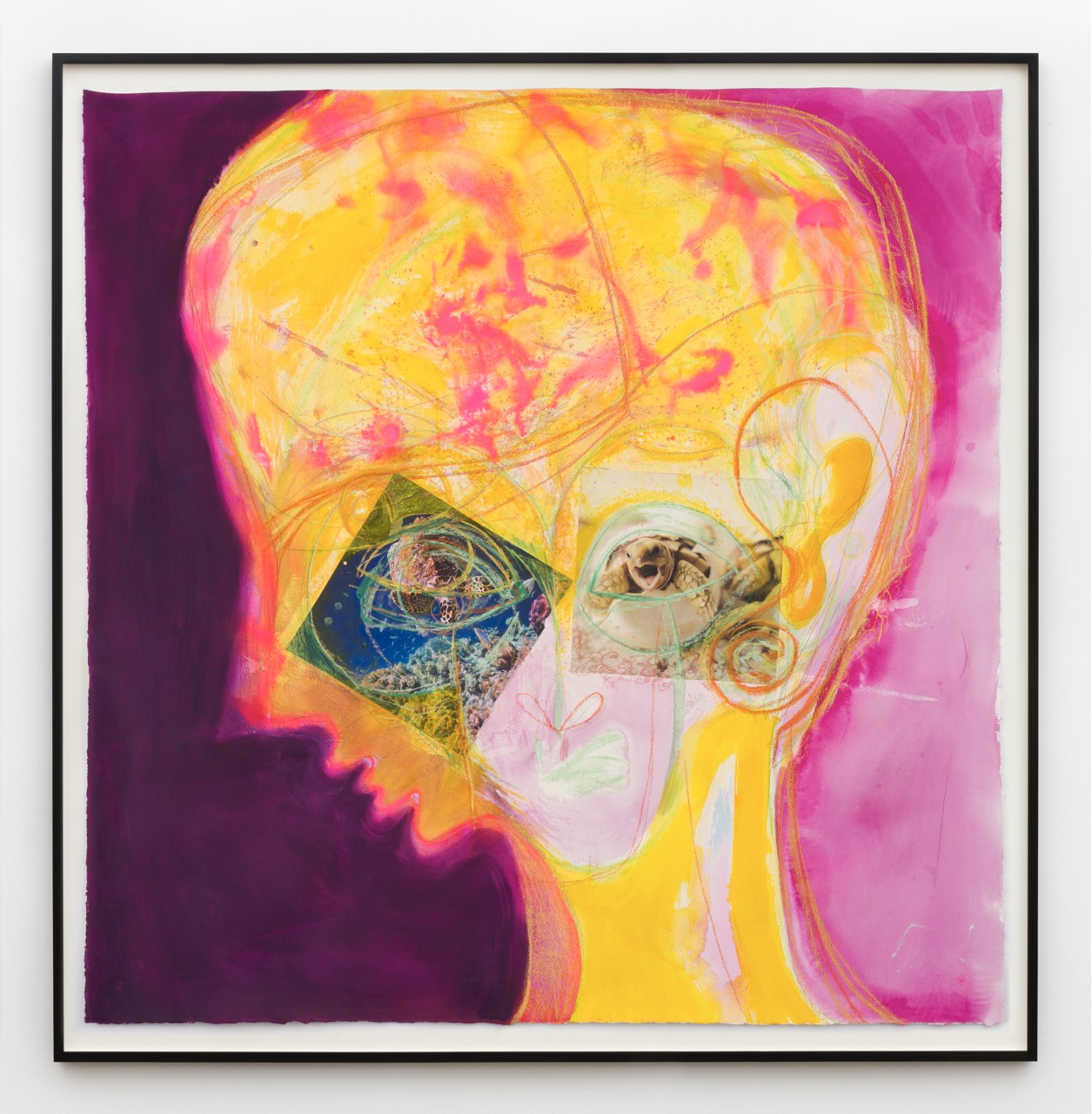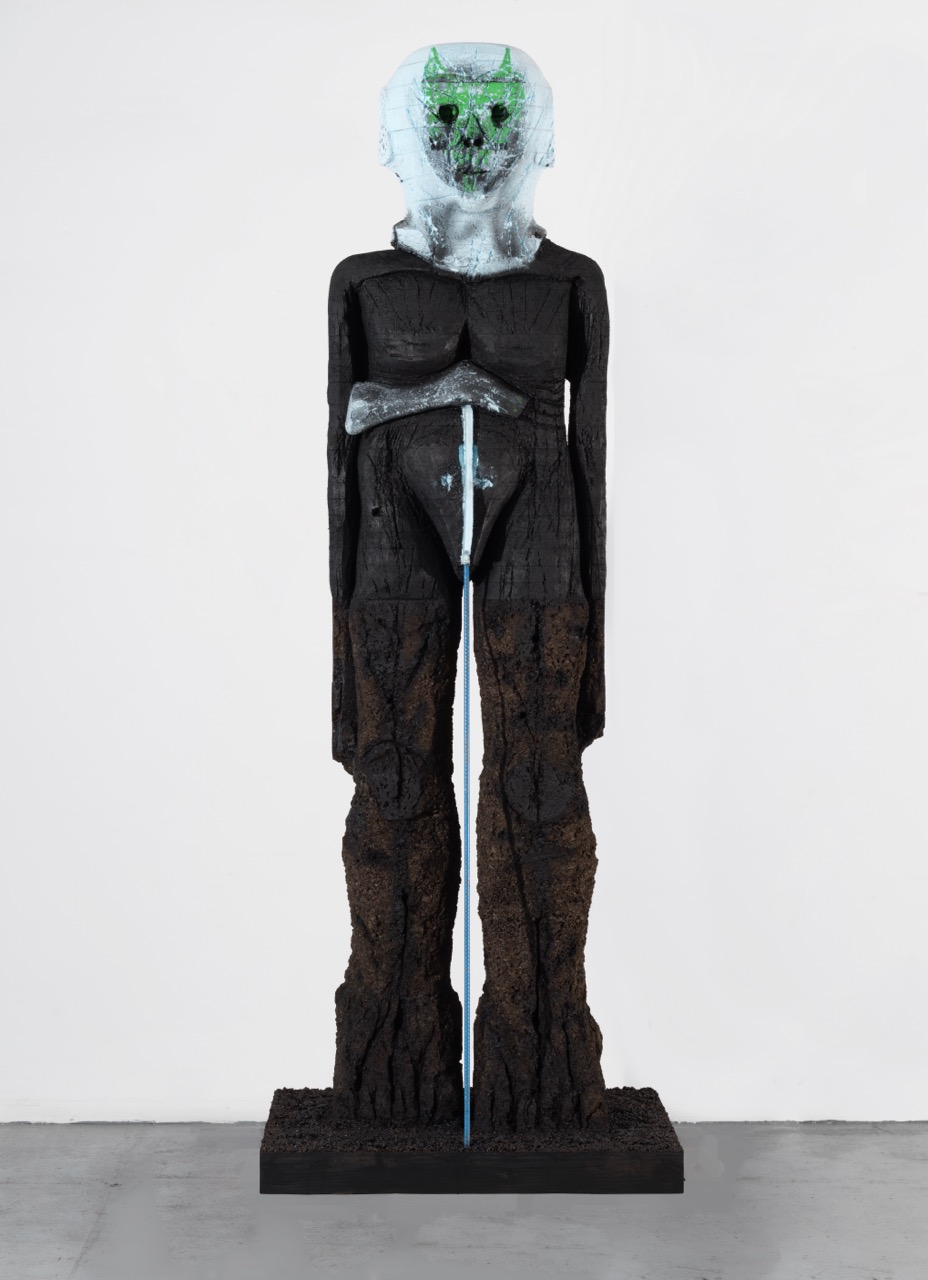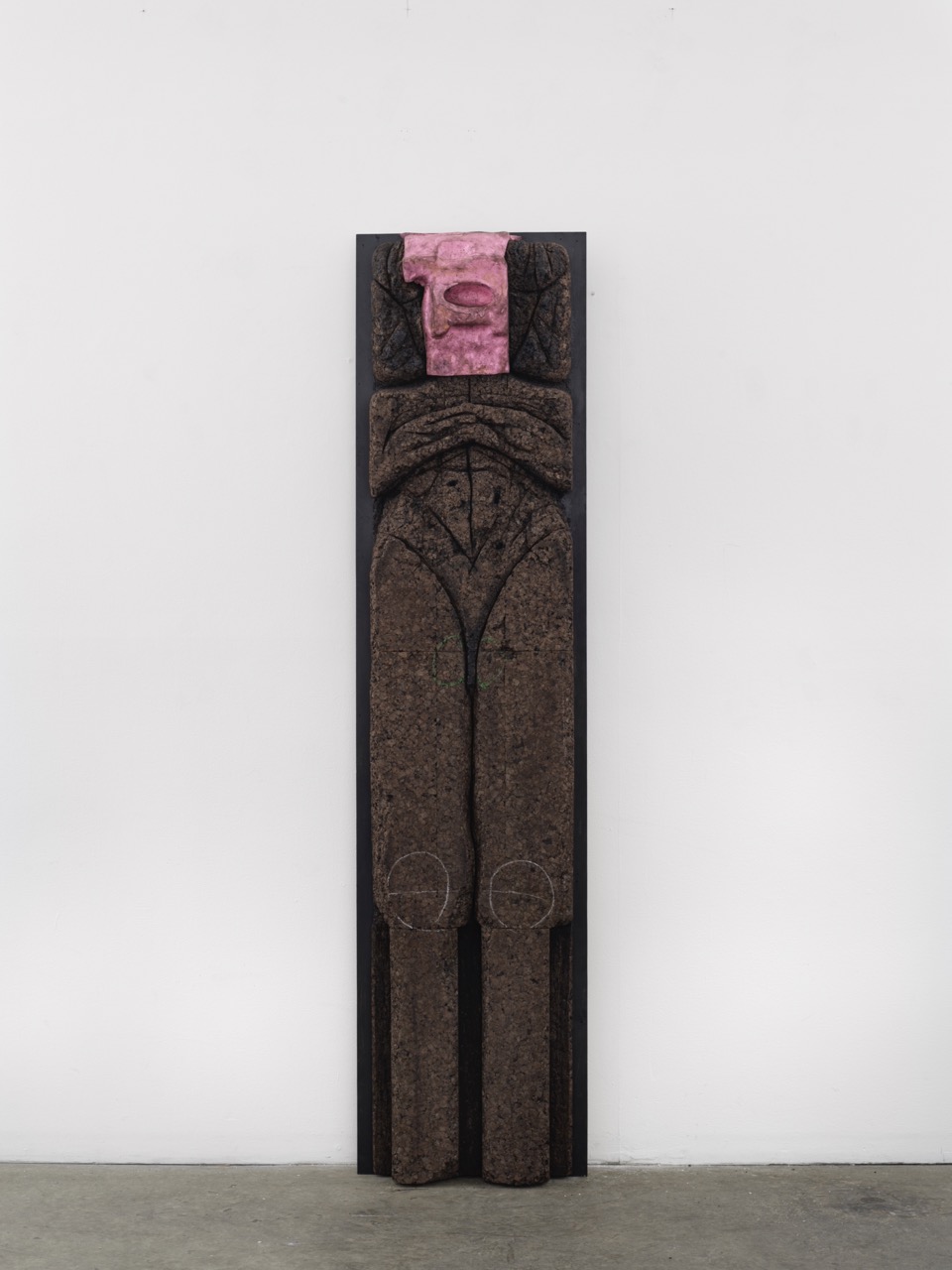
For over three decades, Bhabha has cultivated a singular figurative and material language— one that engages in deep conversation with the legacy of art history while grappling with urgent discourses of the present. Her humanoid figures, forged through varied processes, straddle time: they echo the ancient, confront the contemporary, and gesture toward speculative futures. Each form pulses with emotional gravity and intellectual force, haunted by memory, myth, and a spectral sense of the sacred.
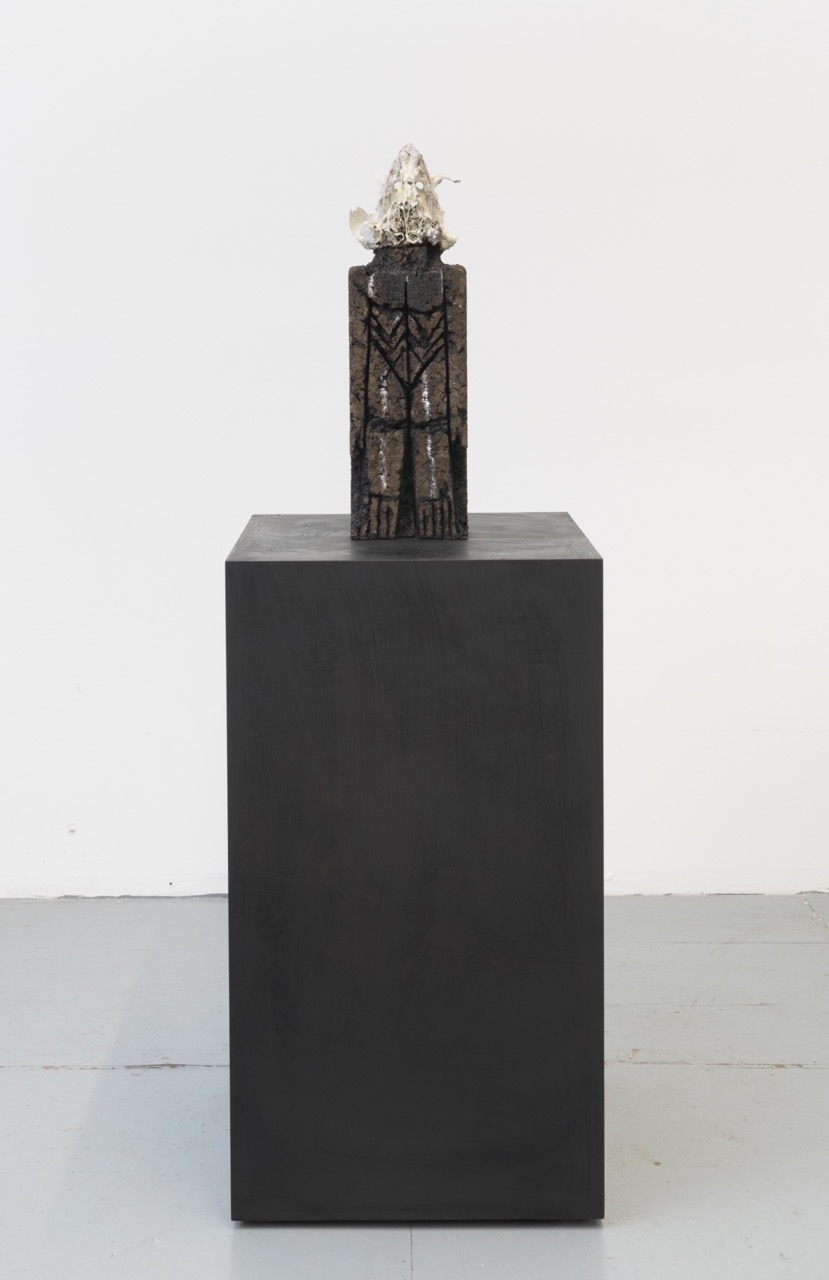
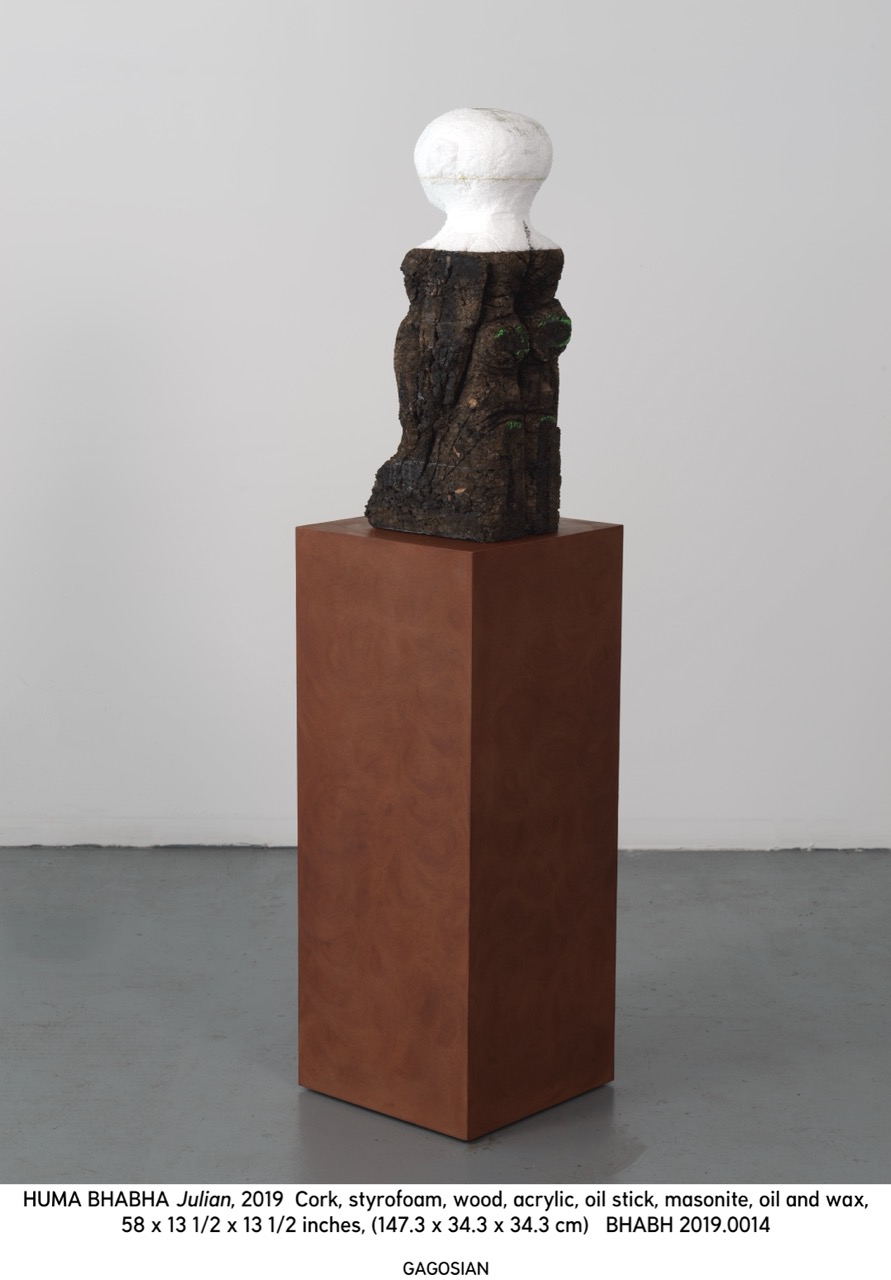
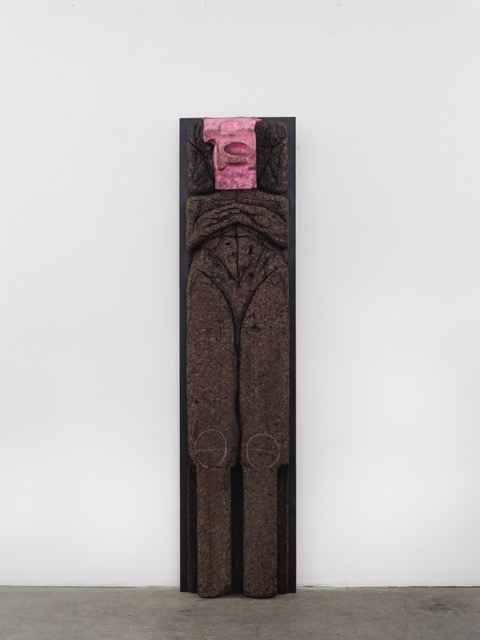
The sculptures in this exhibition exemplify Bhabha’s expansive material experimentation: cork, Styrofoam, rubber, wood, bone, metal, and paint—some repurposed from found objects such as animal skulls and bone fragments—imbue the works with a visceral, almost archaeological weight. One such work is “Writer” (2022), a compact figure carved from cork and elevated on a pedestal. Its body is rendered in sunken relief—a technique largely associated with ancient Egyptian art—in which recessed carving conjures spatial illusion and dimensionality. Deep shadows accentuate prominent anatomical features: the trapezius, buttocks, and limbs emerge in stark tonal contrast. Crowning the figure is a fragment of the skull of a white-tailed deer, a potent memento mori evoking transience and time’s inevitable passing. By juxtaposing industrial material with an organic remnant, Bhabha exposes the fraught tension between nature and culture, echoing the Surrealist tradition of reconfiguring found objects through uncanny associations. In her hands, these materials are reborn— carrying vestiges of the past toward an uncertain future, contingent upon the sculpture’s lifespan.
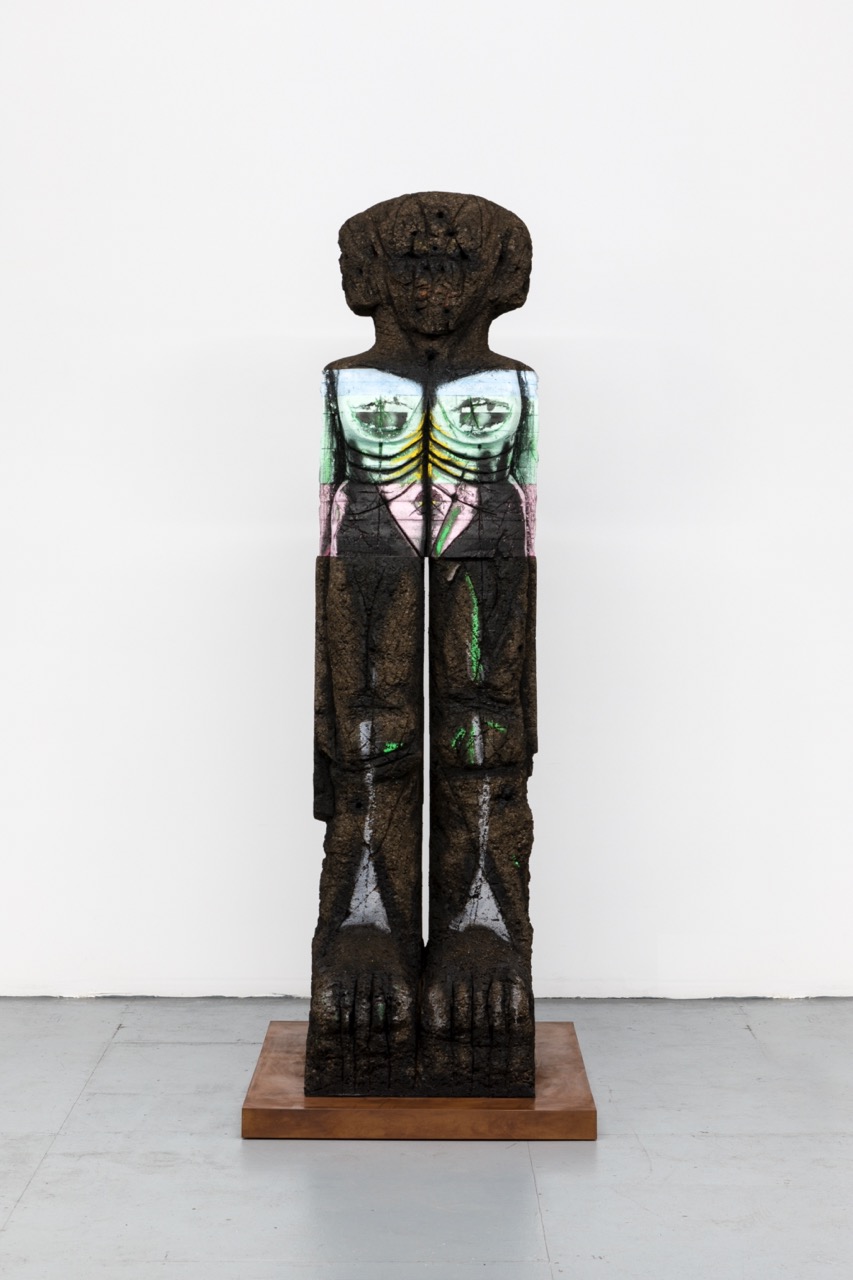
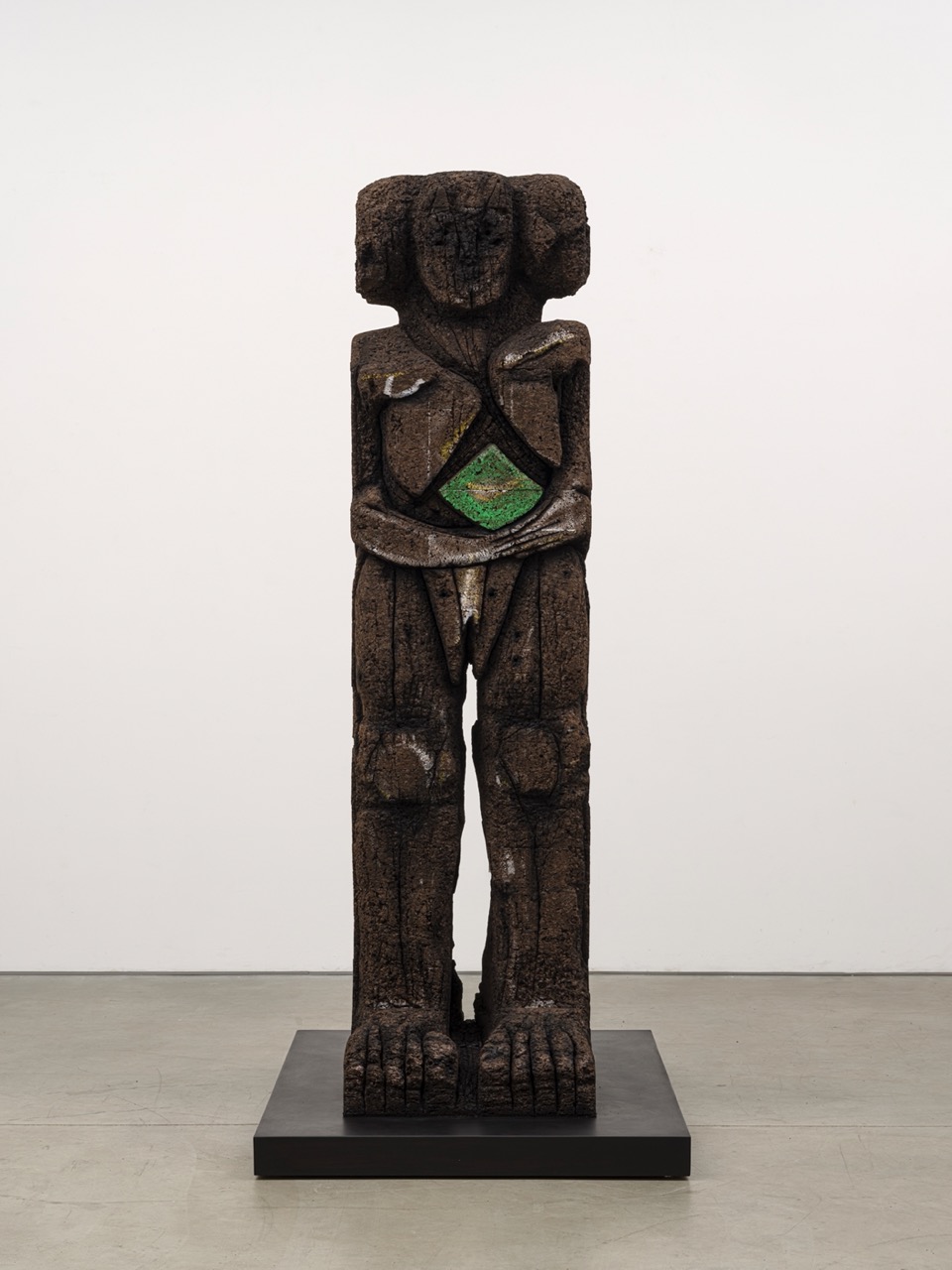
Three towering figures anchor the exhibition space, their coarse cork surfaces in stark contrast to the synthetic sheen of Styrofoam. Yet Bhabha’s incisive linework and bold strokes of oil stick bind these disparate materials into cohesive, hybrid beings. A compelling example is “Third Voice” (2019), a totemic figure standing two and a half meters tall, its robust form poised with the right leg slightly forward. The figure’s weight is centered over two colossal feet, offering a visual stability from every angle—evoking the stance of the Egyptian kouros, suggestive of restrained movement and latent power.
Another important work on view is “Reconstructions” (2007), a portfolio of sixteen photogravures and two woodblock prints. This early series marked a pivotal moment in Bhabha’s evolving practice, where her engagement with themes of war, displacement, and the fragility of the human condition began to crystallize. Through its layered imagery and raw emotional tenor, Reconstructions offers a window into the genesis of Bhabha’s distinctive material, formal, and conceptual lexicon—one forged in response to violence, decay, and survival, and one that continues to resonate with the haunting urgency of today.
For the exhibition Huma Bhabha, all the works on view come not only from our collection, but also through the generosity of collectors and institutions who have entrusted us with their care. Cc Foundation would like to take this opportunity to express our gratitude. In bringing this body of work together to celebrate the artist, we hope the moment also unfolds as a deeply personal reunion—where the artist encounters her earlier creations like long-separated children, each bearing the memory of flickering moments that once breathed life into their becoming.